Moon
Moon · orbits Earth
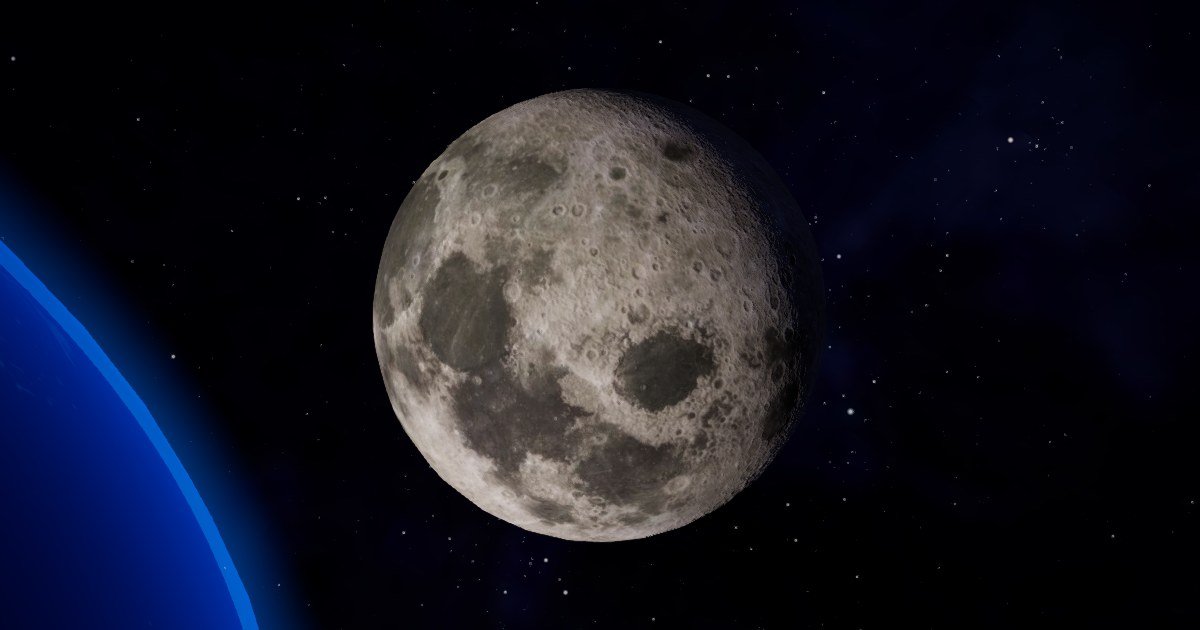
The Moon circles Earth. It's our closest neighbor in space. The Moon makes no light of its own. It reflects sunlight. What you see changes from a new moon to a full moon as more of its sunlit half comes into view.
Free, with nothing to install: drag to rotate the view, scroll or pinch to zoom, and change the date with the time bar.
More in the model: Look inside
Key data
| Diameter | 3,475 km (2,159 mi) | 0.27× Earth |
|---|---|---|
| Mass | 0.012× Earth | |
| Gravity | 0.17 g | 17% of Earth's |
| Rotation | 27.3 days | same side always faces the planet |
| One orbit | 27.3 days | around Earth |
| Temperature | −173 to 127 °C (−279 to 261 °F) | coldest to hottest spot |
| Axial tilt | 6.7° | nearly upright |
Facts
Fun fact
The same side of the Moon always faces Earth. You can never see the far side from here. Each year the Moon moves about 3.8 cm (1.5 inches) farther away. That's about as fast as your fingernails grow.
For the curious
The Moon's average distance from Earth is 384,400 km (238,900 miles). Lined up side by side, the other seven planets would almost exactly fill that gap. The Moon orbits Earth every 27.3 days, but 29.5 days pass from one full moon to the next.