Europa Clipper
Jupiter probe · NASA
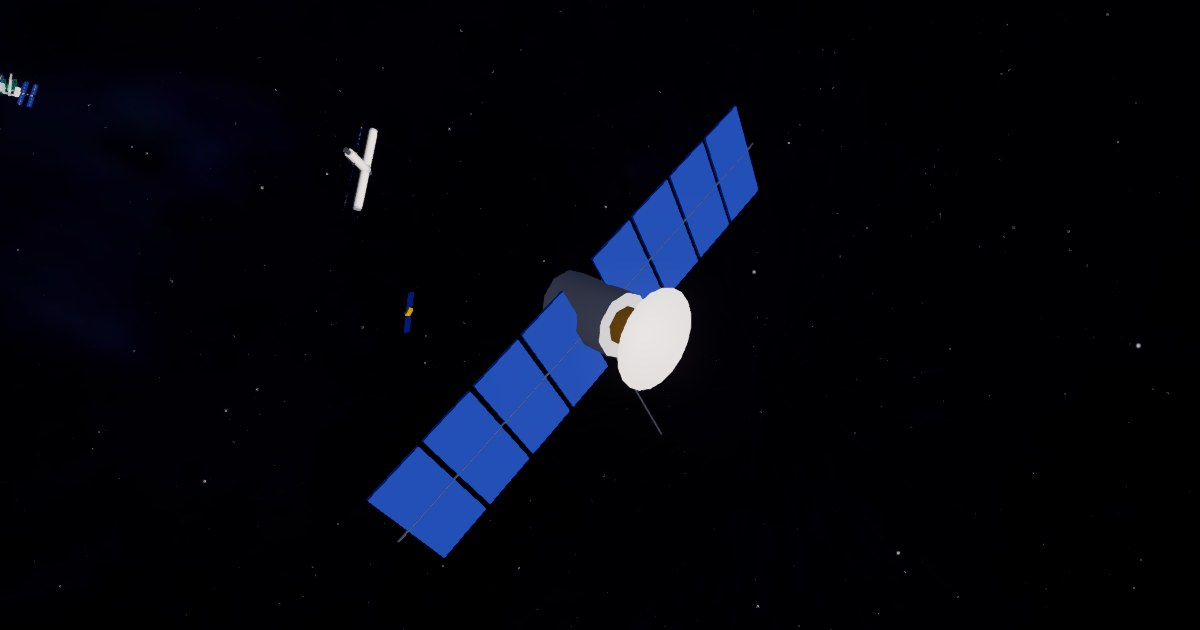
Europa Clipper is on its way to study Europa, one of Jupiter’s moons. Under Europa’s icy shell, there’s probably an ocean with more water than all of Earth’s oceans combined. The spacecraft will look for clues about whether life could survive there.
Free, with nothing to install: drag to rotate the view, scroll or pinch to zoom, and change the date with the time bar.
Key data
| Launch | October 14, 2024 | NASA |
|---|---|---|
| Solar array span | 30 m (98.4 ft) | longer than a basketball court |
| Jupiter arrival | April 2030 | past Mars and Earth on the way |
Facts
Fun fact
With its solar panels spread out, Europa Clipper is about 30 m (100 feet) across. It’s the largest spacecraft NASA has ever sent to another planet. Along the way, it gets a boost from the gravity of Mars and Earth. It will fly past Earth on December 3, 2026, about 3,200 km (2,000 miles) above the surface.
For the curious
A direct flight to Jupiter would take too much fuel, so Europa Clipper is taking a detour past Mars (March 1, 2025) and Earth (December 3, 2026). It will reach Jupiter in April 2030. The intense radiation near Europa rules out staying in orbit around the moon. Instead, the spacecraft will study Europa during about fifty flybys. The model stops showing Europa Clipper when it reaches Jupiter and begins orbiting the planet.
Key moments
- Launch
- Europa Clipper lifted off from Florida on a Falcon Heavy rocket on October 14, 2024.
- Mars
- Europa Clipper flew past Mars on March 1, 2025, about 880 km (550 miles) above the surface.
- Earth
- Europa Clipper will fly past Earth on December 3, 2026, about 3,200 km (2,000 miles) above the surface.
- Jupiter
- Europa Clipper will reach Jupiter on April 11, 2030. That’s when the model stops showing the spacecraft.