Galileo 33 (GSAT0233)
Navigation satellites · EU (run by EUSPA)
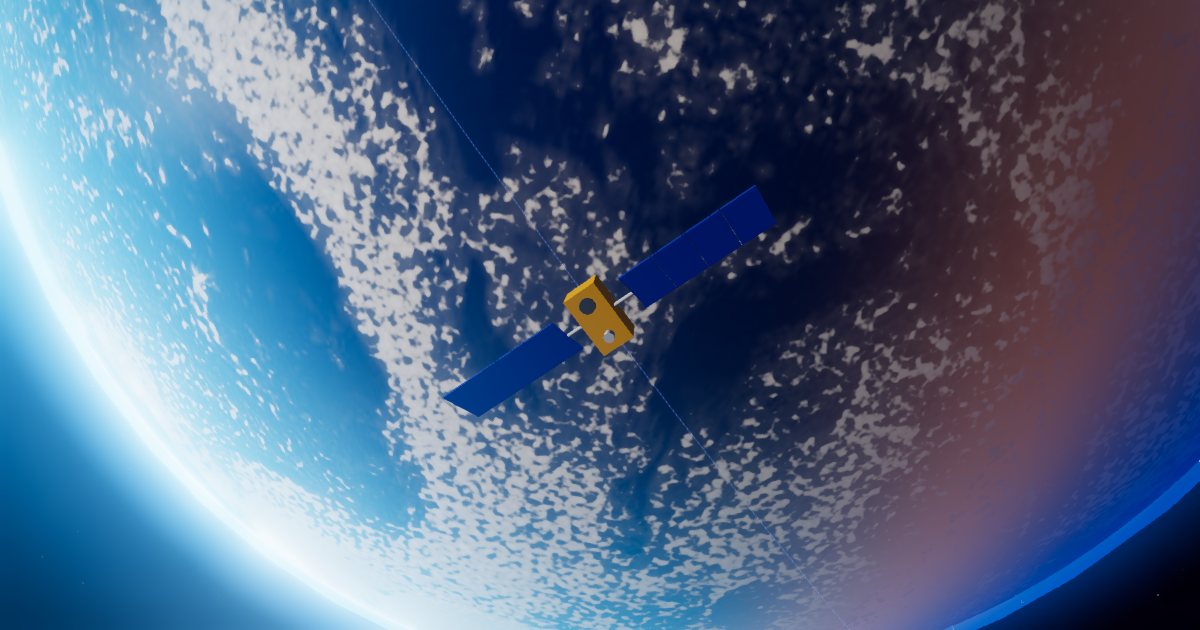
Galileo is Europe’s answer to GPS, the U.S. system that helps you find your way. Its satellites circle Earth about 23,000 km (14,000 miles) overhead. Each one sends out its exact time and location. Your phone uses those signals to find you within a few meters (a few yards).
Free, with nothing to install: drag to rotate the view, scroll or pinch to zoom, and change the date with the time bar.
Key data
| Launch | December 17, 2025 | Ariane 6 rocket |
|---|---|---|
| Mass | 733 kg (1,616 lb) | about ¾ of a metric ton |
| Solar array span | 14.7 m (48.2 ft) | wider than a bus is long |
| Satellites in system | about 30 | 27 available for use |
Facts
Fun fact
Your phone needs signals from at least four satellites to figure out where you are. It times each signal’s trip to find the distance to each satellite. Those distances tell it your location. Most phones today can use Galileo. EUSPA, the agency that runs the whole system, is based in Prague.
For the curious
Galileo 33 is one of about thirty satellites in the system. An Ariane 6 rocket launched it in December 2025 on the rocket’s first flight to carry Galileo satellites. The system is designed for 30 satellites in three orbital planes, with 24 primary satellites and 6 spares. About 30 are in orbit today, and the European GNSS Service Centre (GSC) lists 27 as usable. Each satellite orbits Earth in 14 hours and 5 minutes and returns to the same spot overhead after ten days (17 orbits). The signals travel at the speed of light. A clock error of one millionth of a second would mean a position error of 300 m (about 1,000 feet). That’s why the satellites carry atomic clocks.
Orbits
Key moments
- Launch
- On December 17, 2025, an Ariane 6 rocket lifted off from Kourou, French Guiana, carrying Galileo 33 and 34. It was the first Ariane 6 flight to carry Galileo satellites.