Halley's Comet
Comet
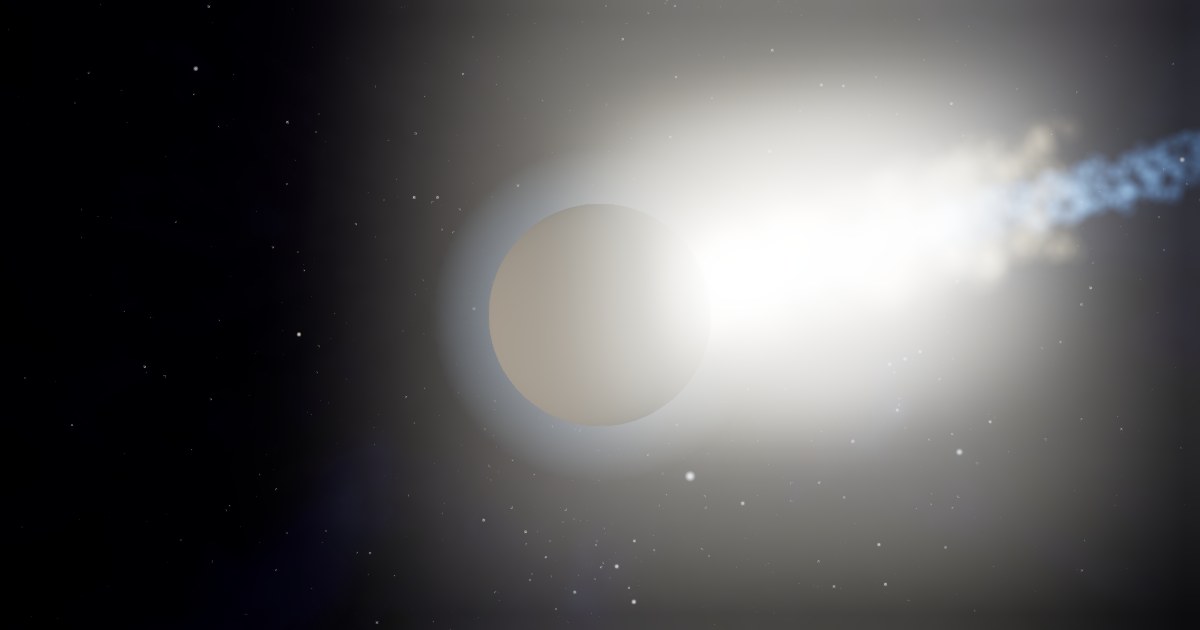
Halley's Comet is a chunk of ice and dust the size of a small city. As it nears the Sun, its ice starts turning to gas. The comet grows a glowing tail millions of kilometers (millions of miles) long.
Free, with nothing to install: drag to rotate the view, scroll or pinch to zoom, and change the date with the time bar.
Key data
| Diameter | 11 km (7 mi) | 0.000862× Earth |
|---|---|---|
| Mass | 2.2 × 10¹⁴ kg (4.9 × 10¹⁴ lb) | tiny compared with Earth |
| Gravity | under 0.0001 g | almost none |
| Rotation | 52 hours | |
| One year | 75.5 years | 27,566 Earth days |
| Temperature | −200 to 127 °C (−328 to 261 °F) | coldest to hottest spot |
Facts
Fun fact
A comet's tail always points away from the Sun, even if that puts it out in front. As the comet heads away from the Sun, it travels tail first.
For the curious
Halley's Comet returns about once every 76 years. It last passed closest to the Sun on February 9, 1986, and will do so again on July 28, 2061. It orbits in the opposite direction from the planets. The dust it leaves behind gives us two meteor showers each year, the Orionids and the Eta Aquariids.