Sedna
Dwarf planet candidate
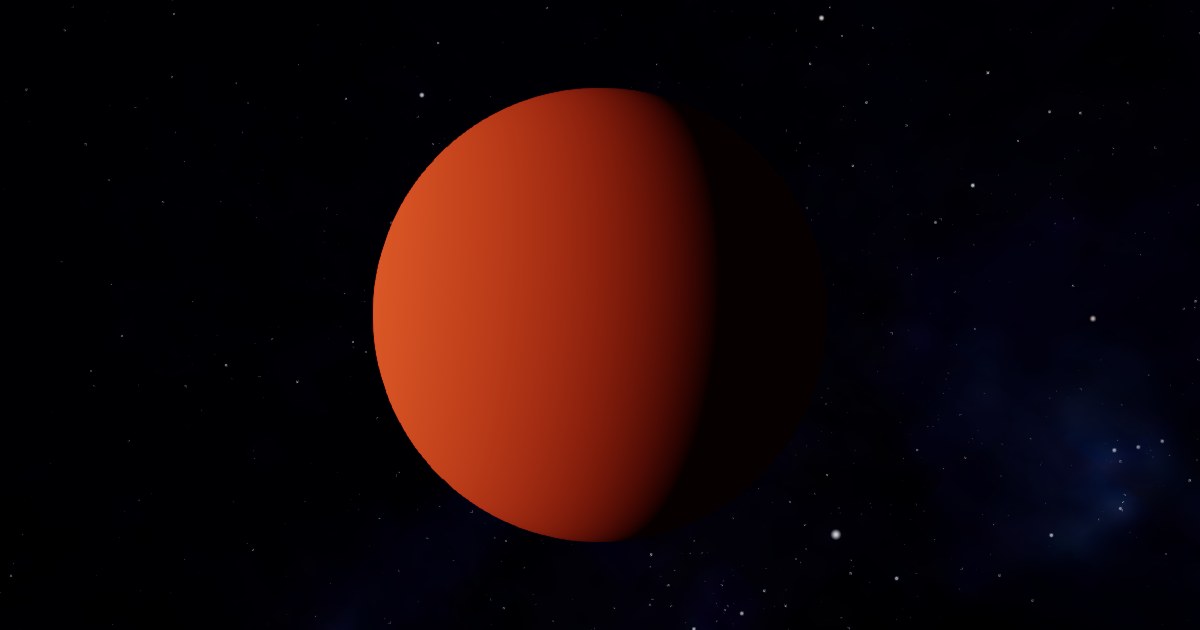
Sedna is a small, icy world, one of the most distant we know in the Solar System. From that far away, the Sun looks like a very bright star. Sedna's surface is almost as red as Mars.
Free, with nothing to install: drag to rotate the view, scroll or pinch to zoom, and change the date with the time bar.
Key data
| Diameter | 995 km (618 mi) | 0.078× Earth |
|---|---|---|
| Rotation | 10.3 hours | |
| One year | 11,389 years | 4,160,000 Earth days |
| Moons | 0 | no moons |
Facts
Fun fact
Sedna takes about 11,400 years to go around the Sun once. Its last orbit began around the time the last ice age ended. It takes its name from the Inuit sea goddess.
For the curious
Sedna is about 1,000 km (600 miles) across. Around 2076, it will make its closest approach to the Sun at 76 astronomical units (au). At its farthest, it reaches roughly 900 to 1,000 au. Its orbit lies beyond the Kuiper Belt, and Sedna may belong to the inner Oort Cloud. Most astronomers count it as a dwarf planet, though that classification is still unofficial. No one has found a moon orbiting Sedna.