Jupiter
Gas giant · #5 from the Sun
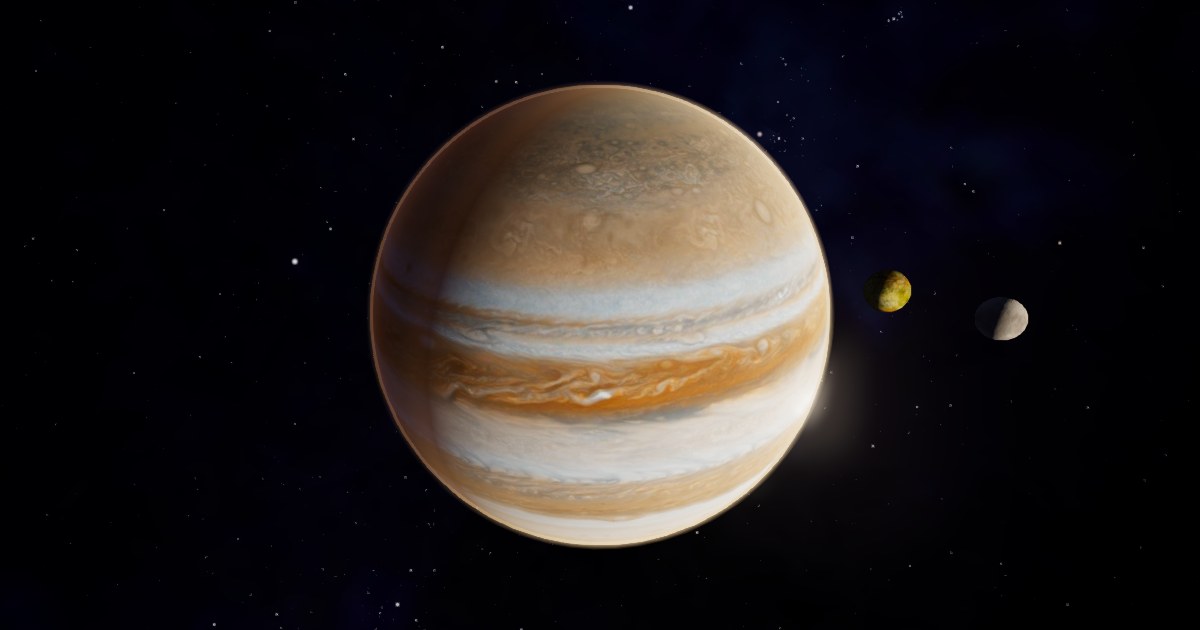
Jupiter is the biggest planet. More than 1,300 Earths could fit inside it. There's no solid ground to stand on. Jupiter is a giant ball of hydrogen and helium. The stripes you see are clouds.
Free, with nothing to install: drag to rotate the view, scroll or pinch to zoom, and change the date with the time bar.
More in the model: Look inside
Key data
| Diameter | 142,984 km (88,846 mi) | 11.2× Earth |
|---|---|---|
| Mass | 318× Earth | |
| Gravity | 2.5 g | 253% of Earth's |
| One day | 9.9 hours | one full turn on its axis |
| One year | 11.9 years | 4,333 Earth days |
| Temperature | −110 °C (−166 °F) | in the clouds (1 bar) |
| Moons | 115 | and more are being found |
| Axial tilt | 3.1° | nearly upright |
Facts
Fun fact
Jupiter's Great Red Spot is a storm bigger than Earth. People have been watching it for at least 190 years, and it's still going.
For the curious
Jupiter has two and a half times the mass of all the other planets combined. As of April 2026, it has more than 110 known moons. Galileo Galilei discovered the four largest in 1610. You can see them with ordinary binoculars.