New Horizons
Pluto probe · NASA
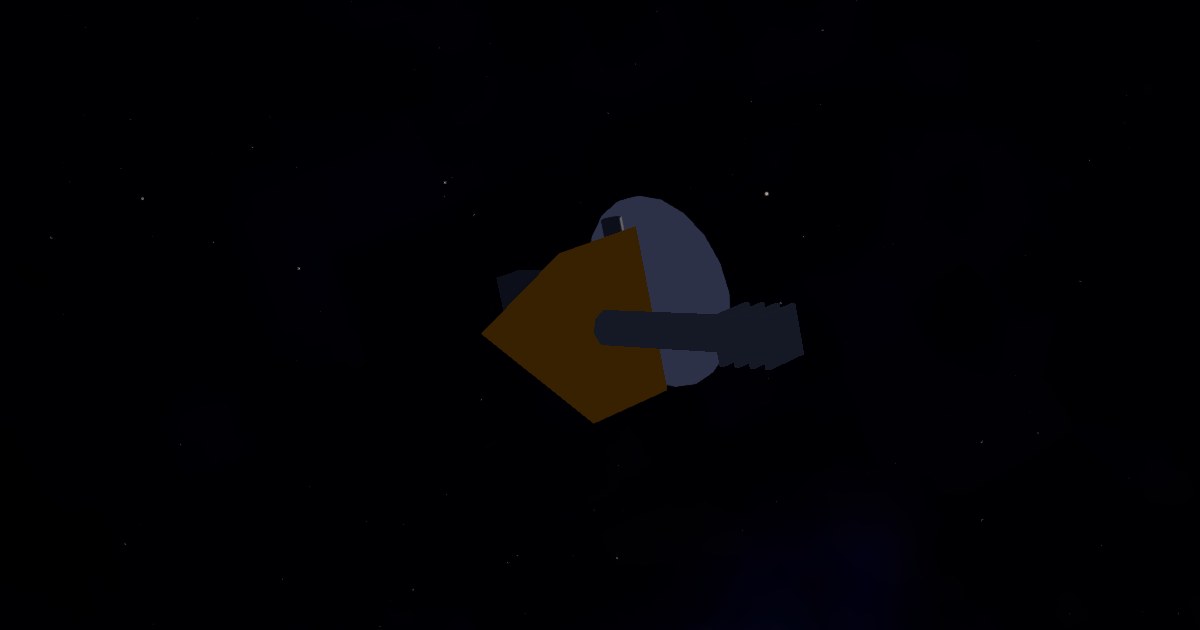
New Horizons was the first spacecraft to visit Pluto. So far, it's the only one. In July 2015, it flew past and took pictures of icy mountains and a big, bright heart. Much of that heart is made of nitrogen ice. Now the spacecraft is flying even farther from the Sun.
Free, with nothing to install: drag to rotate the view, scroll or pinch to zoom, and change the date with the time bar.
Key data
| Launch | January 19, 2006 | NASA |
|---|---|---|
| Large antenna | 2.1 m (6.9 ft) | points at Earth |
| Pluto | July 14, 2015 | flyby 12,500 km above the surface |
Facts
Fun fact
New Horizons left Earth faster than any spacecraft before it. It took only about 9 hours to cross the Moon’s orbit. The Apollo astronauts took three days to get that far. On board are some of the ashes of Clyde Tombaugh, who discovered Pluto in 1930.
For the curious
Even with a boost from Jupiter’s gravity, New Horizons took 9.5 years to reach Pluto. At closest approach on July 14, 2015, it was about 12,500 km (7,800 miles) above the surface. Its signal took nearly 4.5 hours to reach Earth. The spacecraft continued through the Kuiper Belt. On January 1, 2019, it flew past Arrokoth, the most distant object any spacecraft has seen up close. New Horizons continues to explore the outer edge of the Solar System.
Key moments
- Launch
- New Horizons lifted off from Florida on an Atlas V rocket on January 19, 2006.
- Jupiter
- New Horizons came closest to Jupiter on February 28, 2007, passing about 2.3 million km (1.4 million miles) away. Jupiter’s gravity sped it up and cut about three years off its trip to Pluto.
- Pluto
- New Horizons came closest to Pluto on July 14, 2015, about 12,500 km (7,800 miles) above the surface.
- Arrokoth
- On January 1, 2019, New Horizons flew past Arrokoth, a small, icy world about 43 au from the Sun. That’s about 43 times as far from the Sun as Earth is.